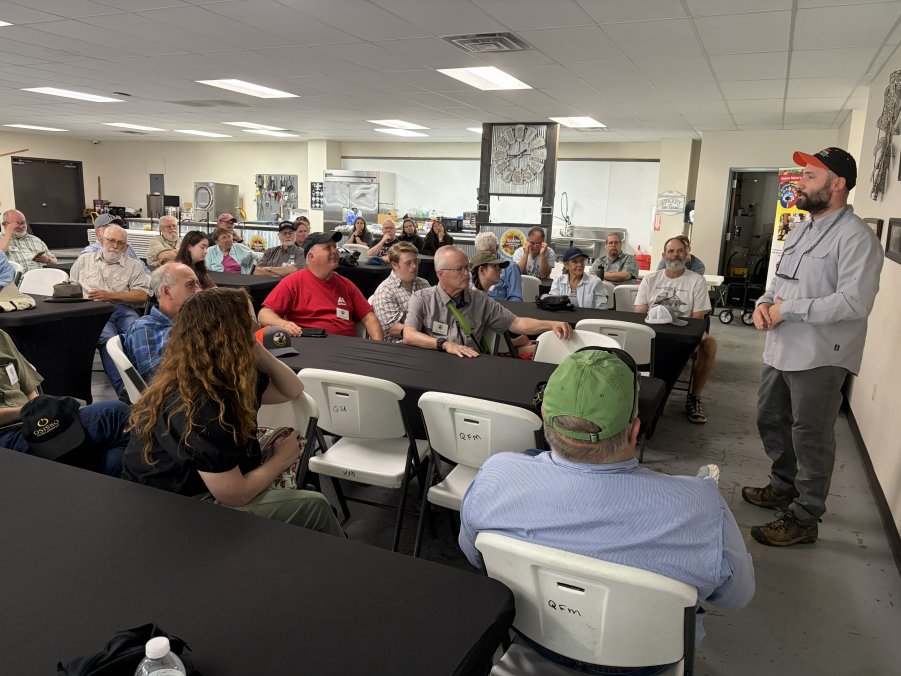
Craig Kreman, of the Quapaw Environmental Office, gives a presentation
on the history of lead and zinc mining, processing, and
reclamation/remediation in the lands of the Quapaw Nation.His talk provided an introduction to the next part of the field
trip.
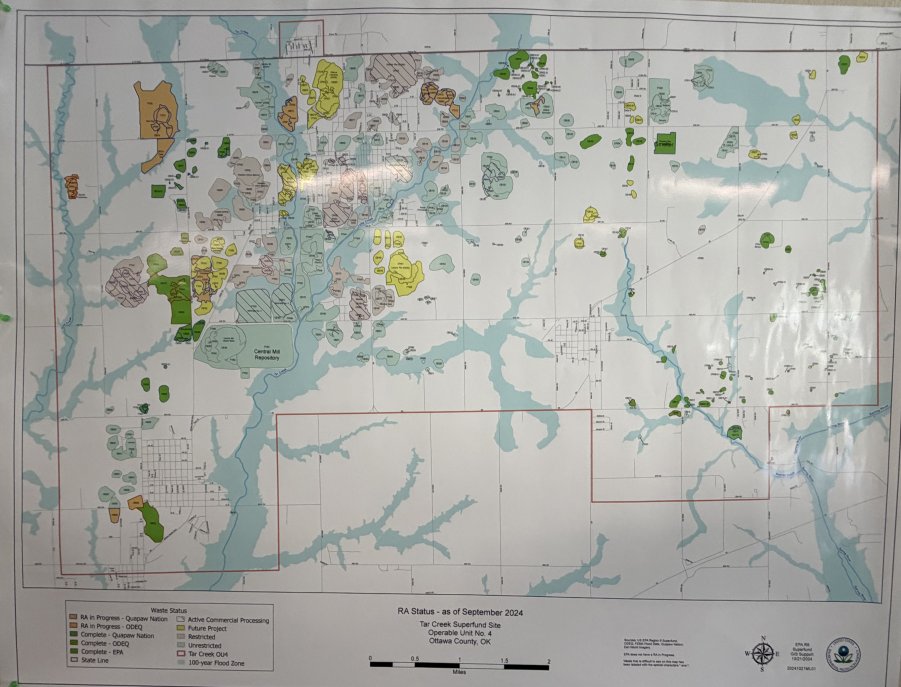
Map of the Tar Creek Superfund projects in the Picher Field. These
projects are mostly concerned with the many chat (solid waste/tailings)
piles located throughout the mining district. They contribute to
contamination of Tar Creek.
There is not much left of the once bustling mining towns of
Picher and Cardin. Located on the middle of the Picher Field. EPA
conducted a buyout of most local residents.Then a tornado destroyed most of everything that was left of
Picher except the town high school, fire department, and water tower.|
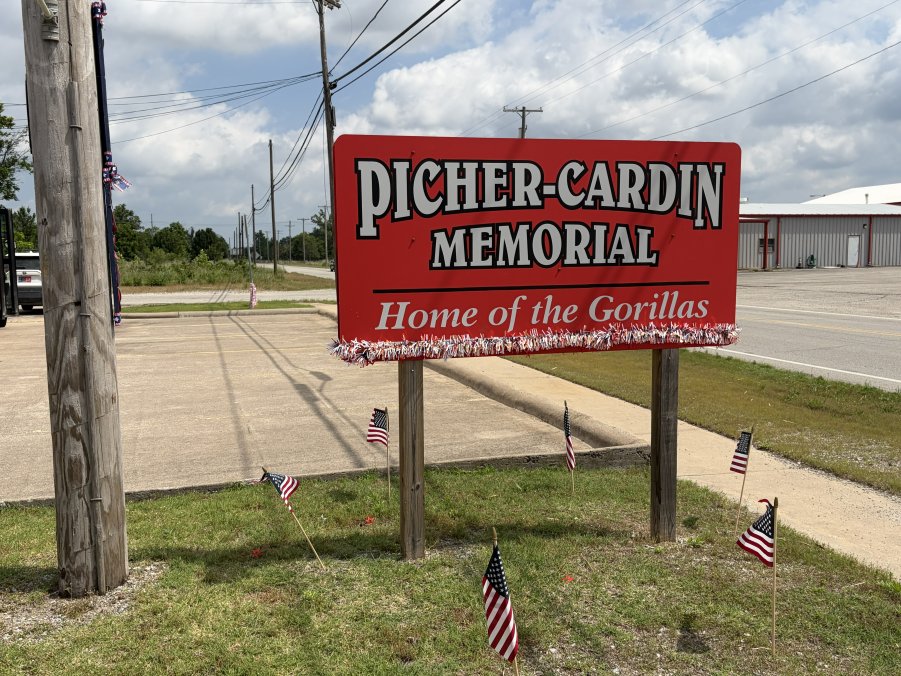
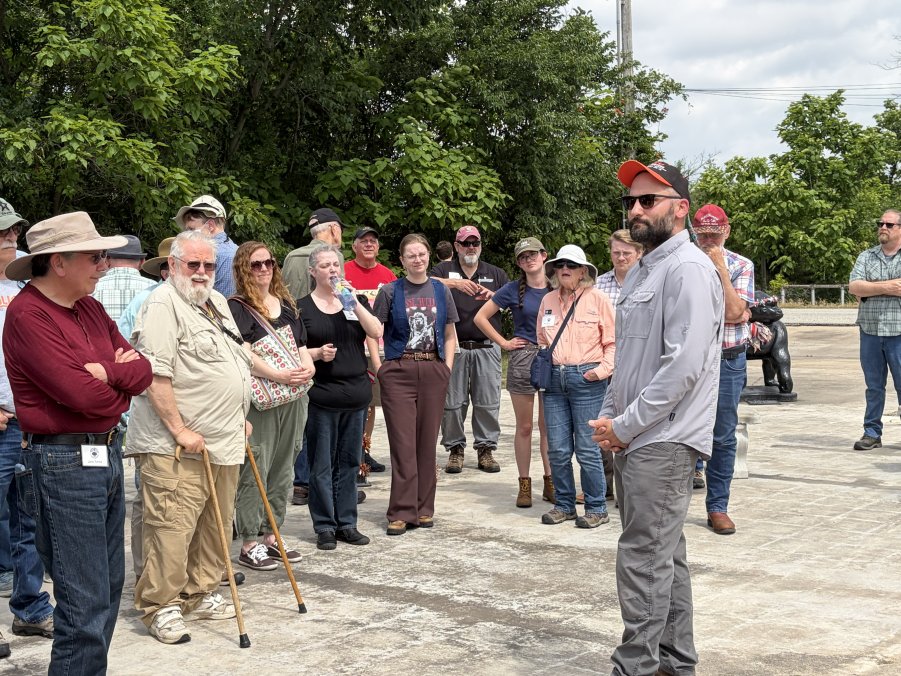
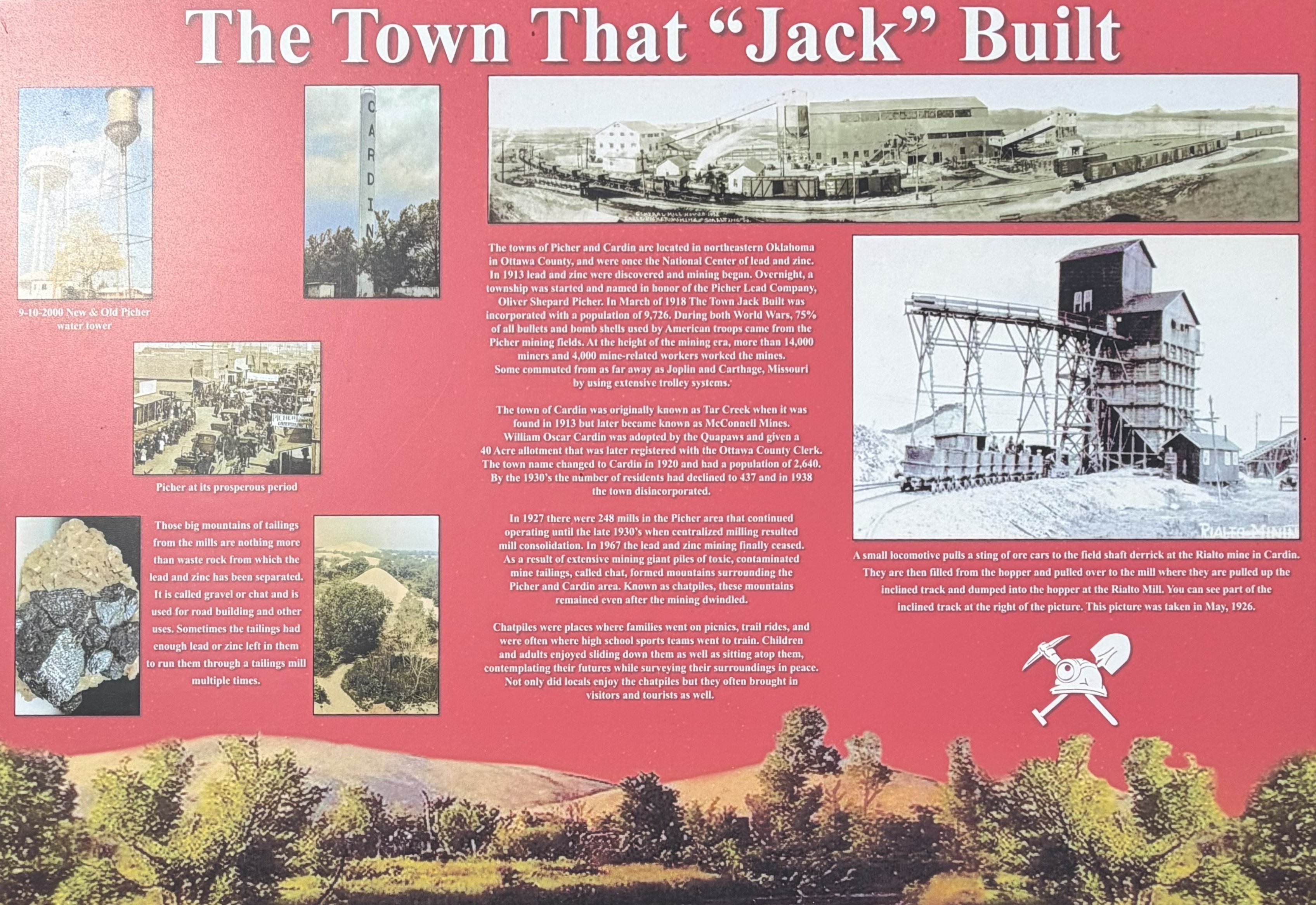
The MHAers at the Picher-Cardin Memorial hear the story of the
towns from Craig Kreman.
(Above) The memorial park contains several interpretive signs
that tell the story of Picher.
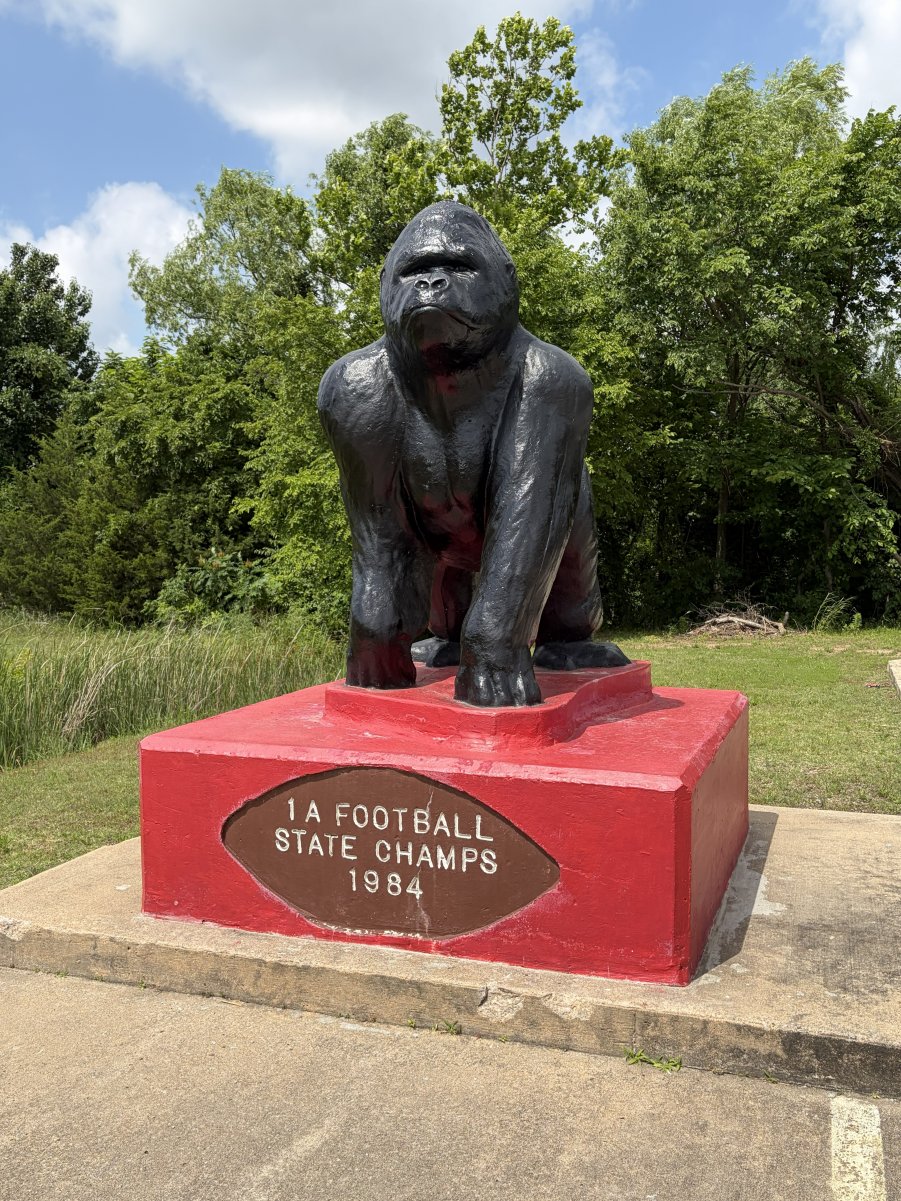
(Right) The towns in the Tri-State had high school sports teams that
were highly competetive and a source of community pride.The Picher High School 1984 championship is memorialized by a
statue of its mascott, The Gorilla.
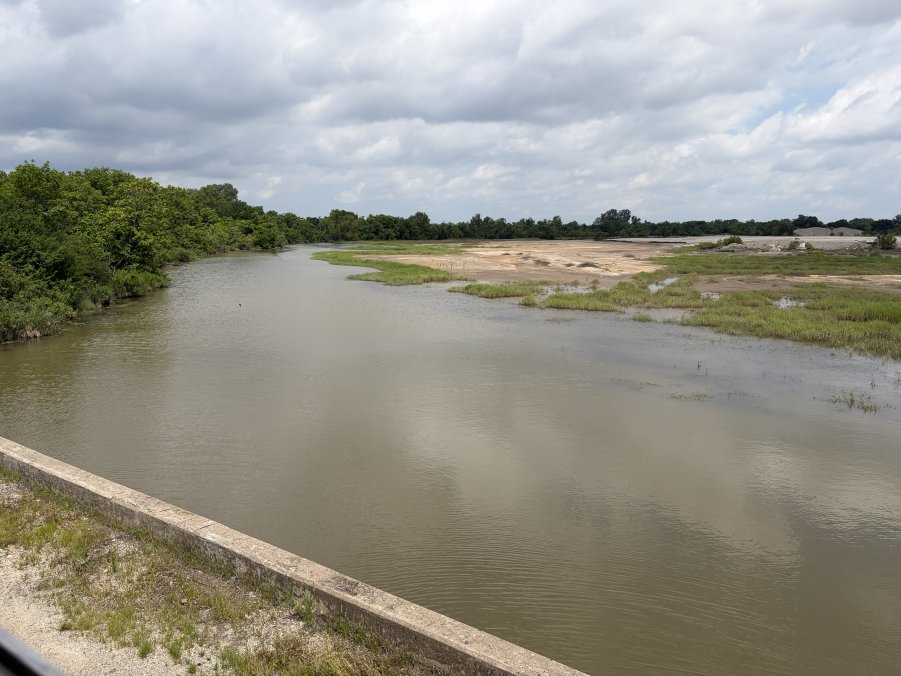
Back on the bus, where there was a brief stop on a bridge west
of Picher. Tar Creek was eroding a chat pile that was a source of water
pollution.An EPA removal
action eliminated the pile and the problem.
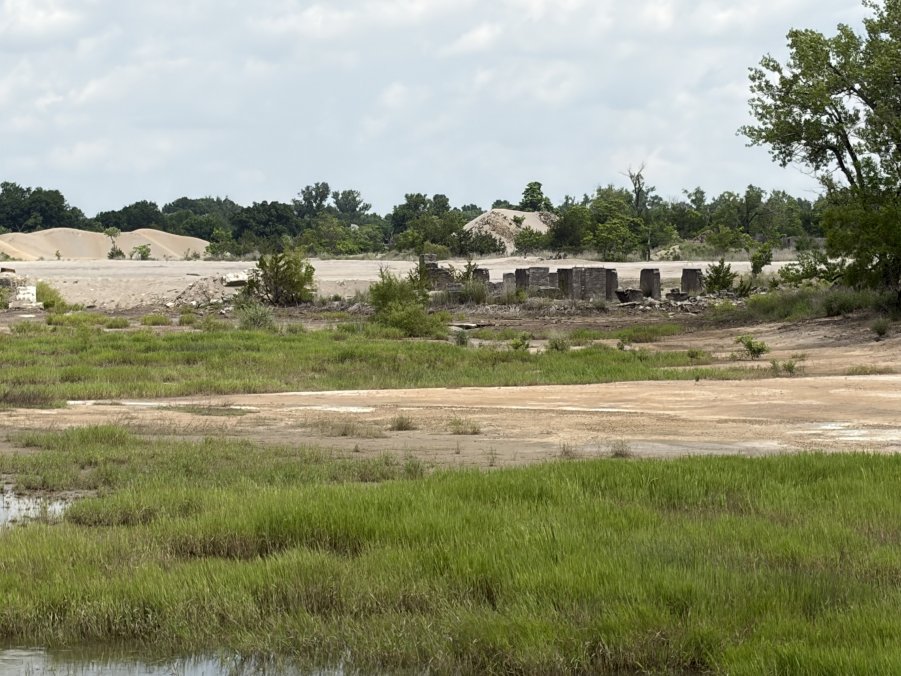
This closeup photo shows the foundations of the large
mill that had generated the chat pile.
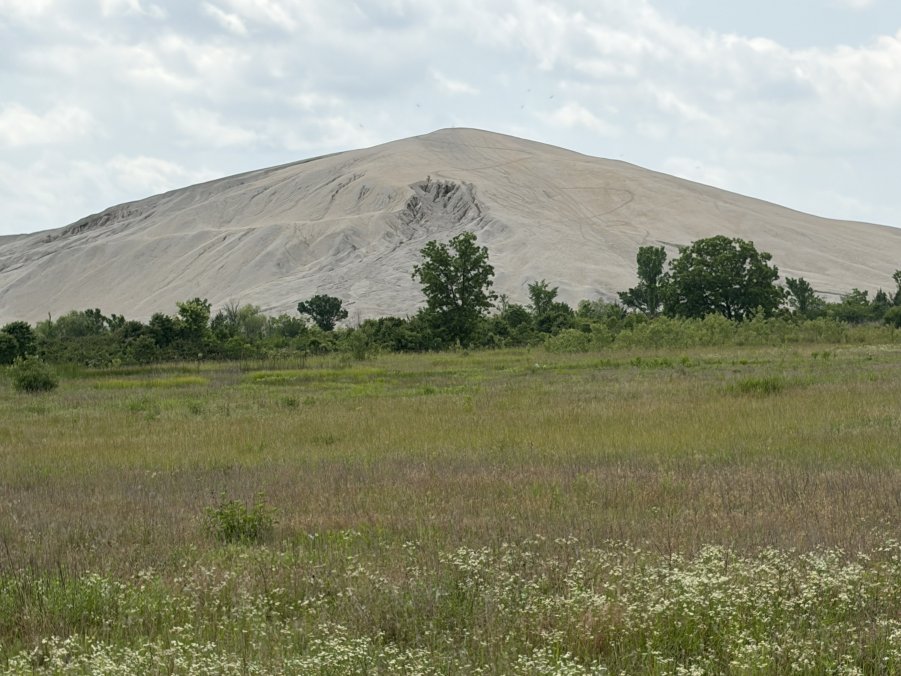
Continuing along the road, one of the few remaining large chat
piles was seen.
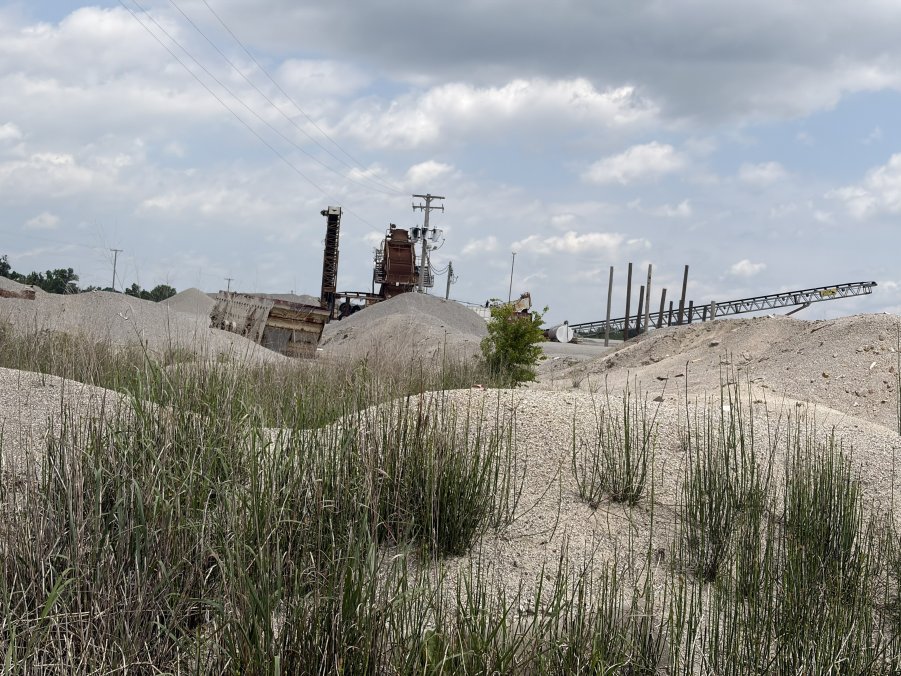
Another chat pile was being screened and sold as aggregate
material.
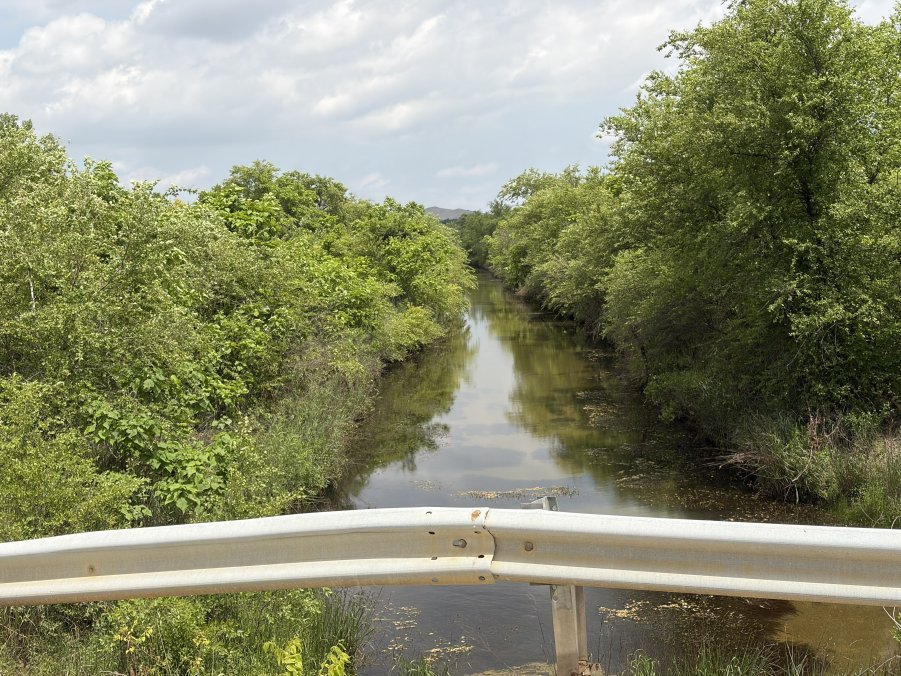
At another bridge crossing, the creek water appears clean.
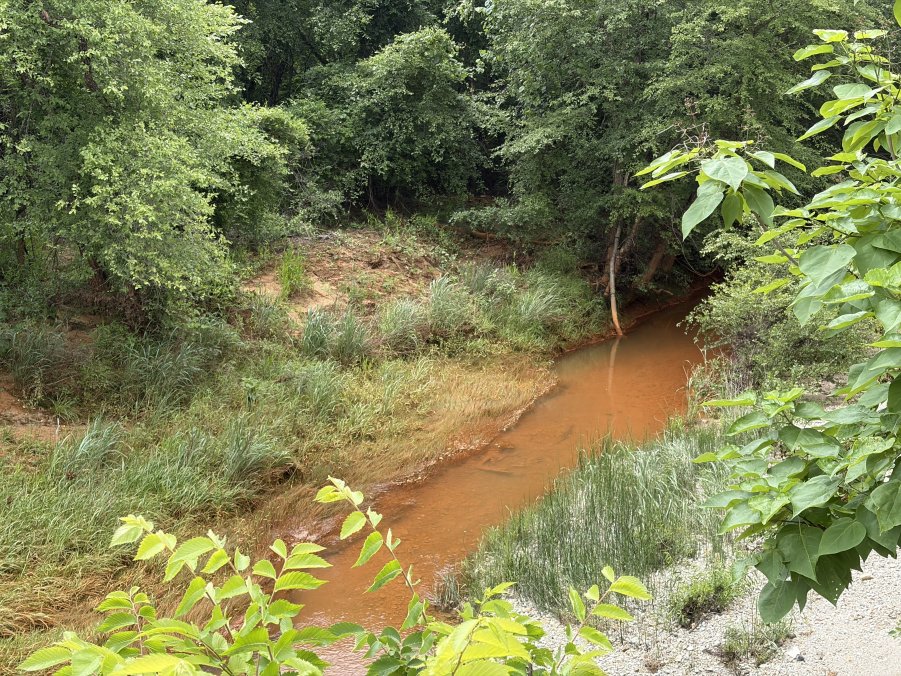
A polluted tributary shows typical “yellow boy” iron
hydroxides.