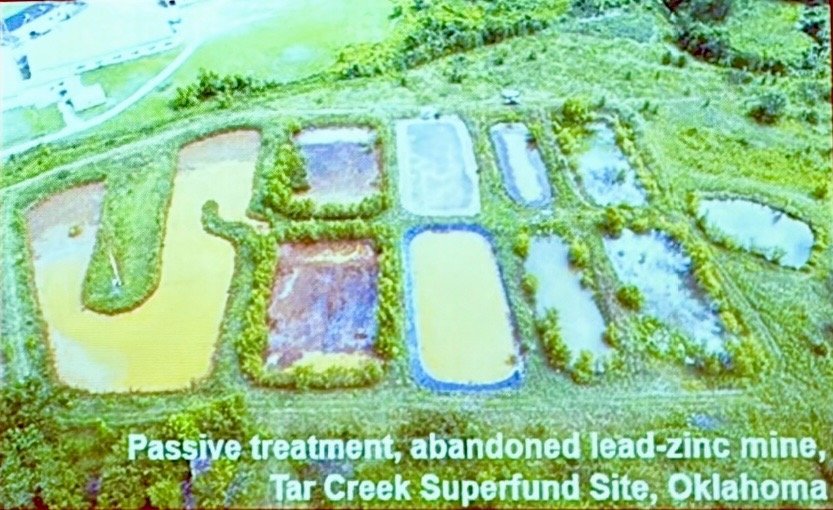
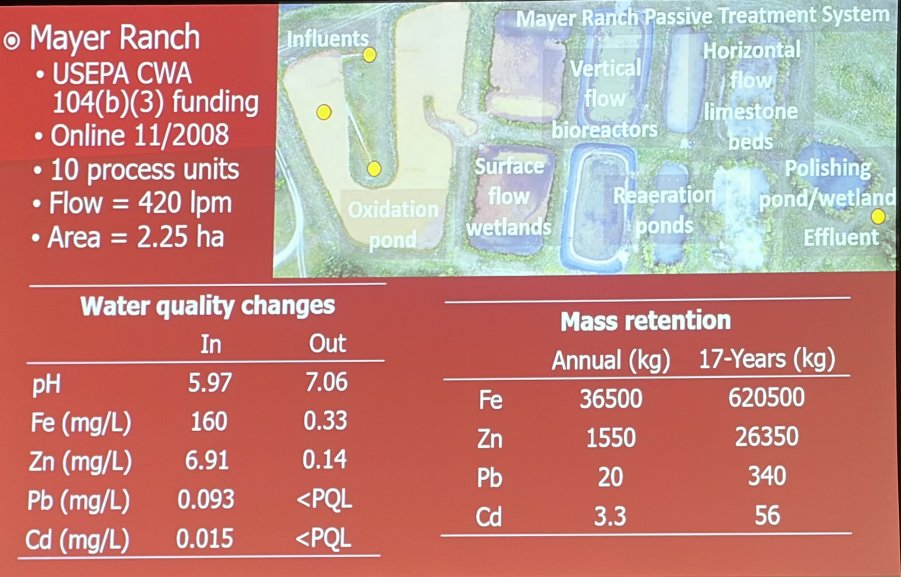
Diagram of the Mayer Ranch Passive
Water Treatment System. Contaminated water enters the first cell at the
upper left corner, passes through the six stages of treatment, and exits
from the righthand finishing cell. This system has operated for 18
years. (photo from Bob Nairn’s MHA presentation)
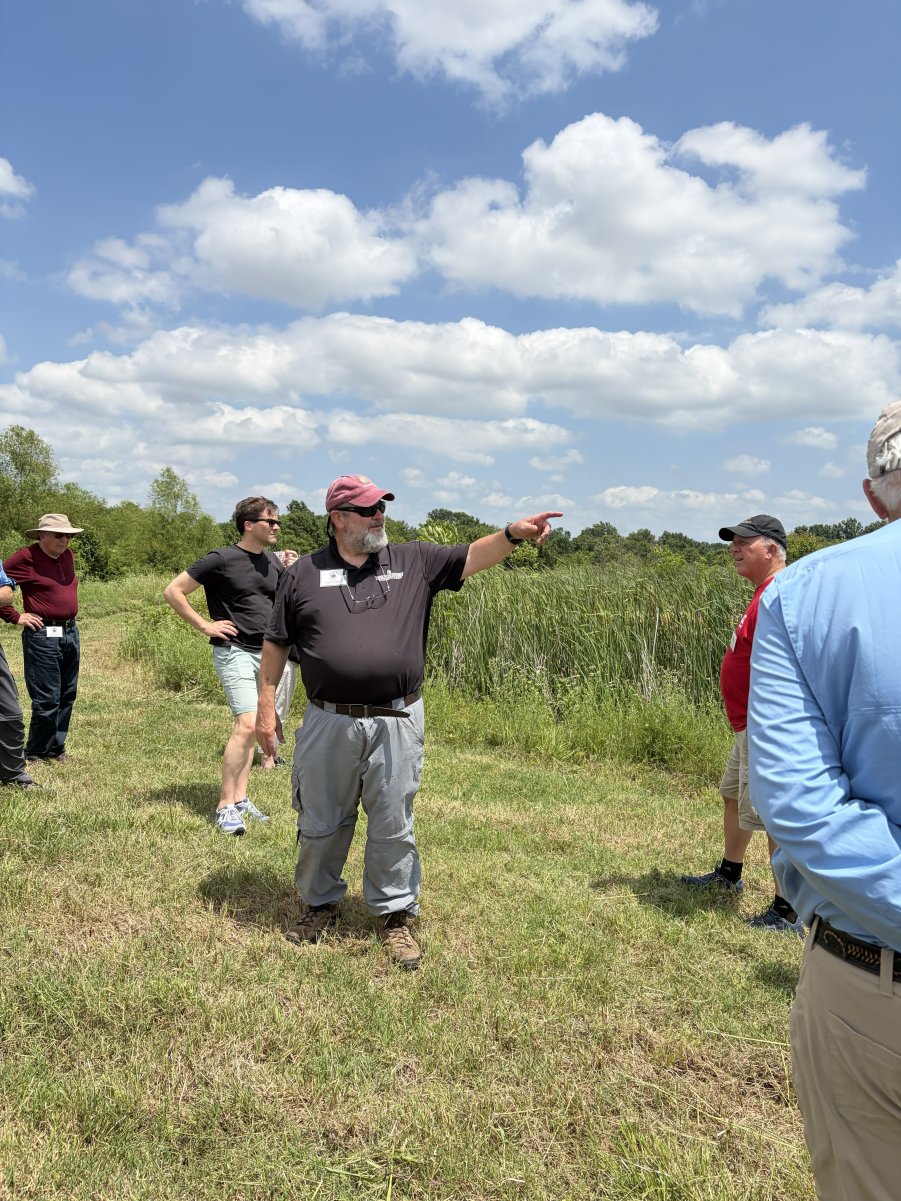
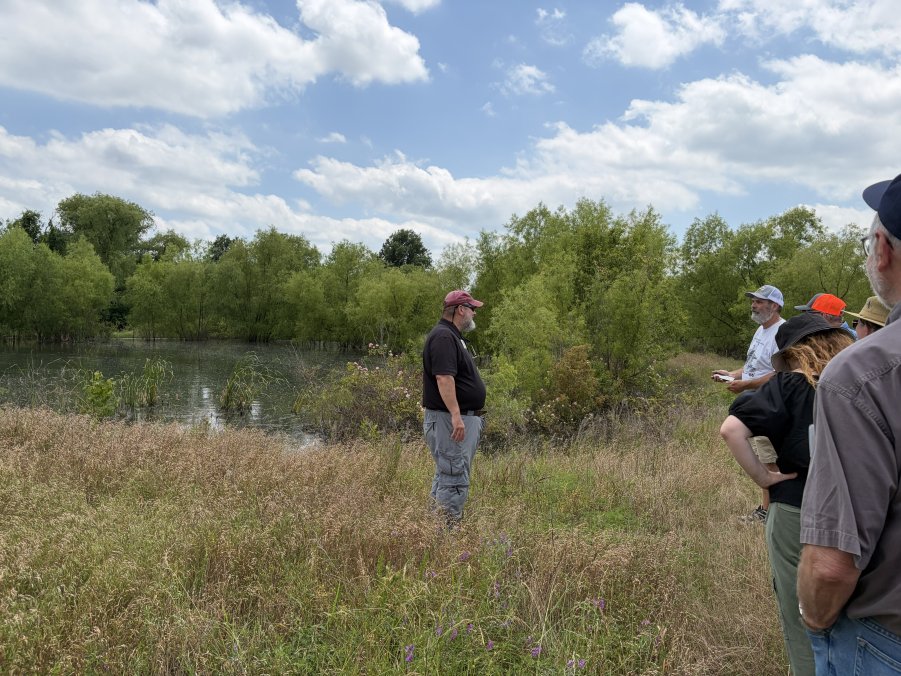
(Left) Bob Nairn explains how the contaminated water enters the first
cell of the treatment system.
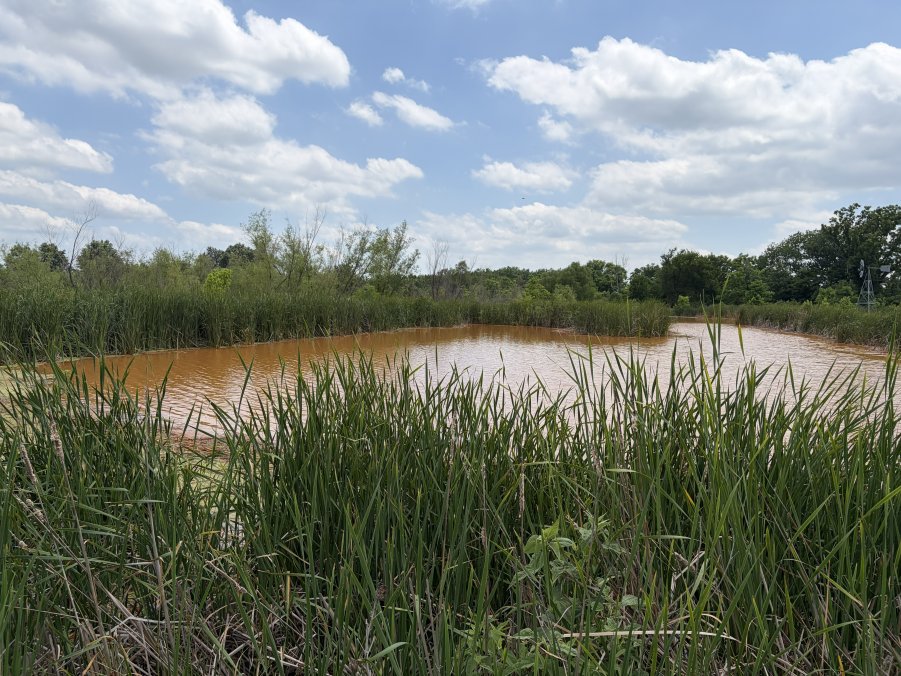
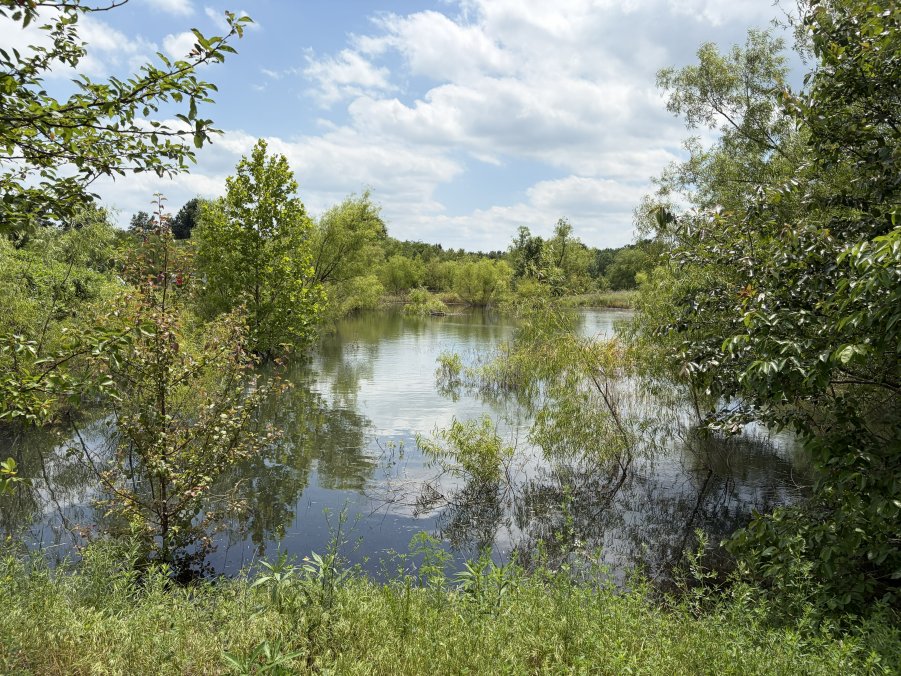
(Above) The first cell
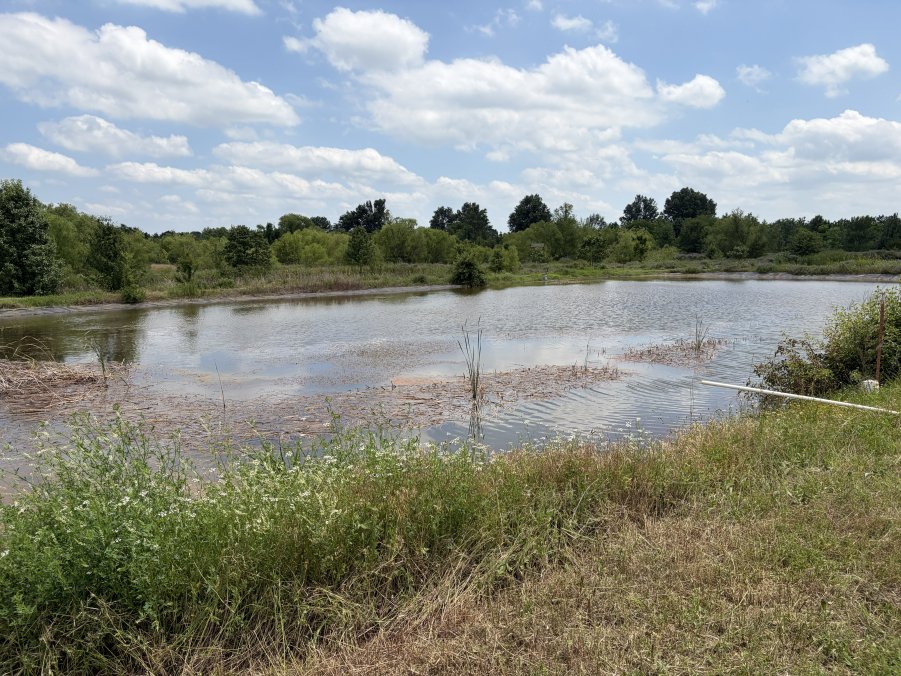
is a horseshoe shaped pond which performs an oxidation function. The
first part of the horseshoe is seen here.
Oxidation is more visible in the second part of the horseshoe shaped
first cell.
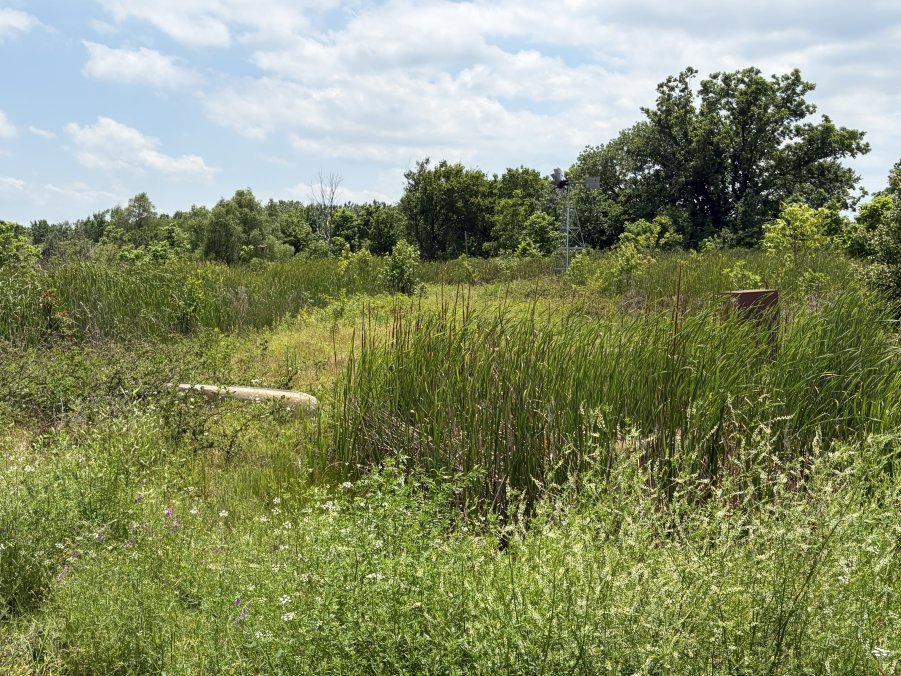
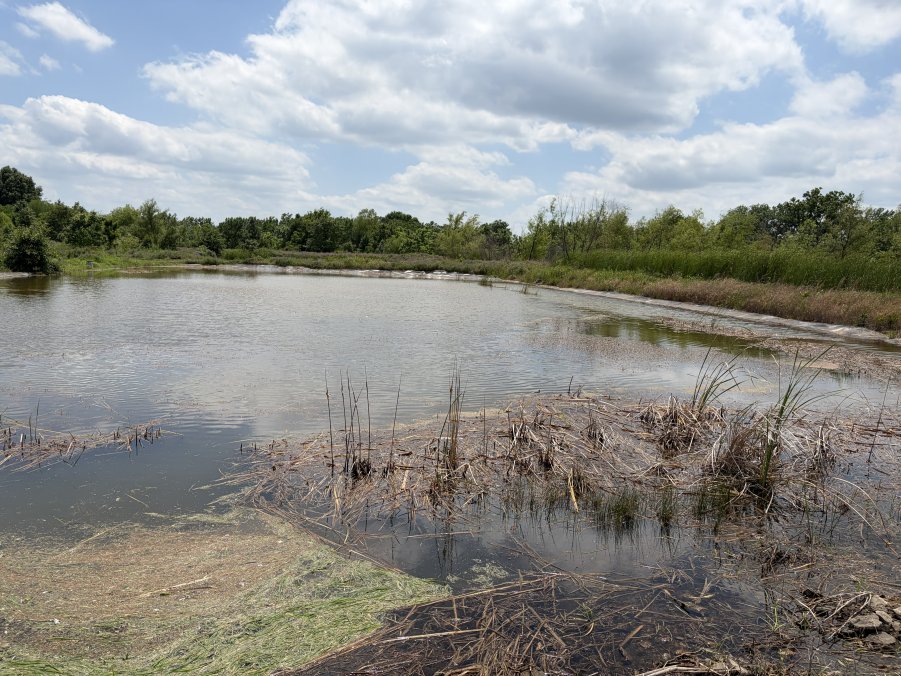
View of the 2nd cell, surface flow wetlands.
View of the 3rd cell, vertical flow bioreactors.
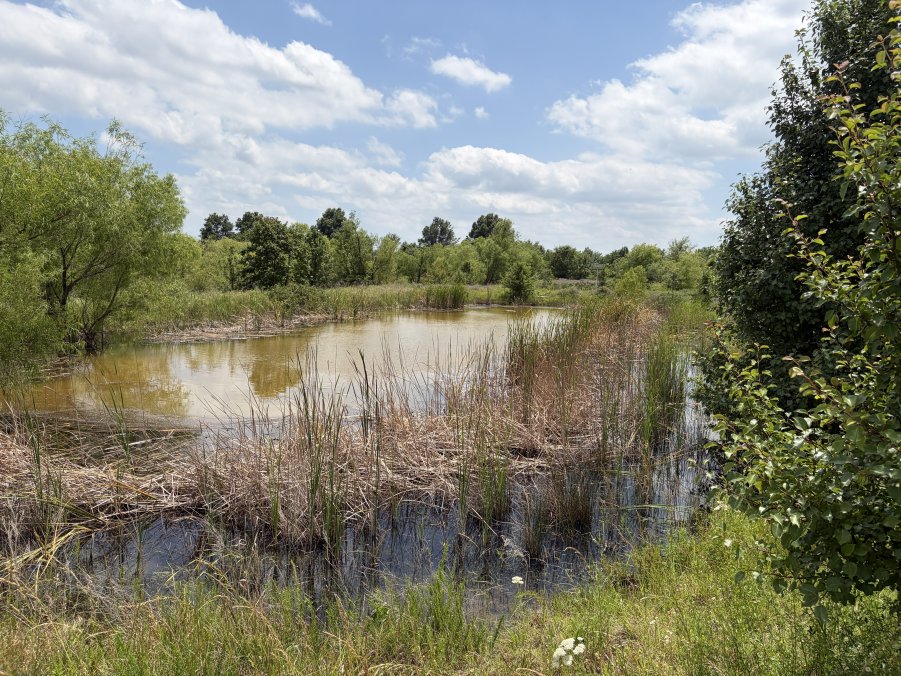
View of the 4th cell, regeneration ponds.
View of the 5th cell, horizontal limestone beds.
Bob Nairn and the MHAers at the 6th cell, polishing pond and
effluent point.
The results of 17 years of operation
of the Mayer Ranch wetland project. (photo from Bob Nairn’s MHA
presentation)
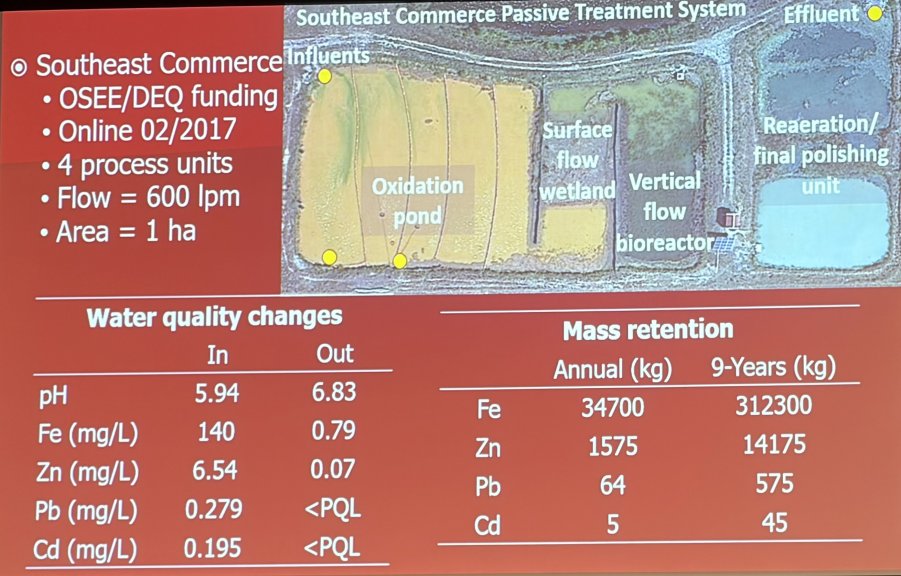
The results of 9 years of operation of
the Southeast Commerce wetland project. This project was not visited on
the tour. (photo from Bob Nairn’s MHA presentation)
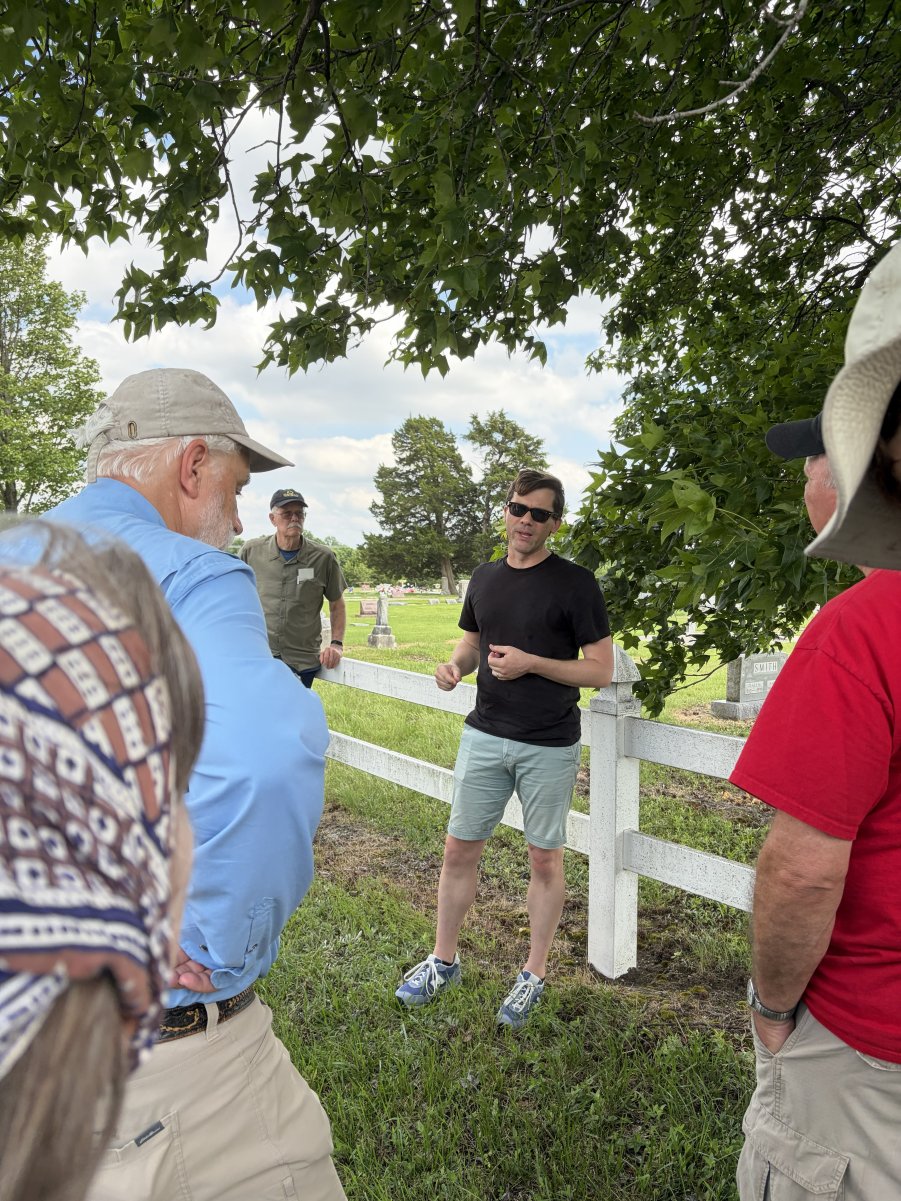
(Left) After a short bus ride we arrived at the Greenlawn Cemetery.Jarod Roll (center) described the challenges of organizing labor
unions in the Tri-State especially during the Great Depression.
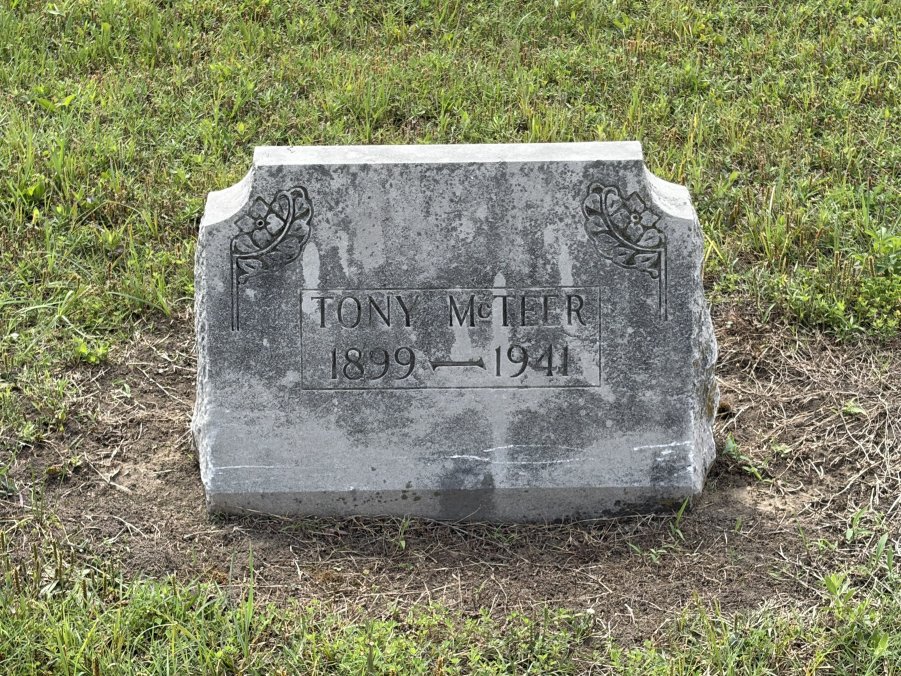
(Above) Tony McTeer was a long-time miner in Picher and an influential
member and leader of Local 15 of the International Union of Mine, Mill,
and Smelter workers.Mine
Mill was affiliated with the American Federation of Labor (AFL).